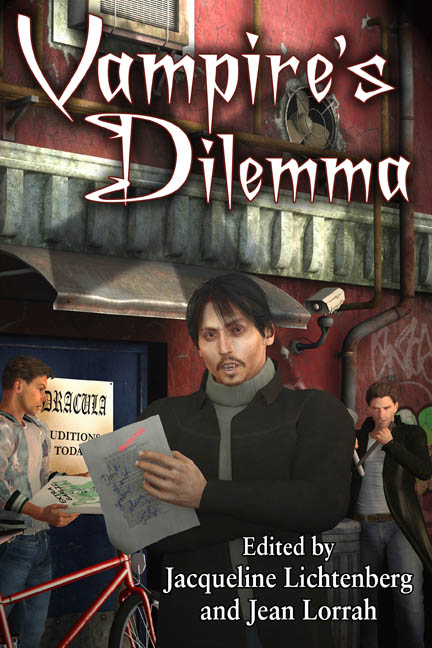
I have a story in this anthology; my first published work outside of a magazine
Read this; I’ll wait.
She desired to be a writer, but had not considered making a living as part of the plan. When she did, she gave up the notion of a writing life for a while and ‘did other things.’
I have a few thoughts about this.
One is that doing ‘other things’ isn’t necessarily a bad thing. If you’re able to write all day long and not have to do other things, how good will you be? Even Jane Austen had to work at living in her constricted society, which provided much fodder for her post French revolutionary novels. One can definitely say that she wrote about what she knew. Most of us end up doing other things and write when we can.
Still, why shouldn’t a person who wants to write think about how a full-time writing life might be funded? My mother wanted me to be an attorney, my father wanted me to be either a nurse or a teacher until such time as I married and founded my own family. Idiot that I was, I thought a teaching career meant shoehorning knowledge into the brains of ten year olds and I never thought about becoming a professor of English; despite Career Day, I never had a firm grasp on the options available (which were fairly limited at the time).
I get annoyed with my callow, past self sometimes for being too easily dissuaded. But in the late 1960s, the library lacked the materials that could tell me what a writer’s life was really like and the books that famous writers wrote about writing were nearly unintelligible to a 16 year old with little life experience. There was no internet to browse, and every adult I talked with told me to pick something more serious and suitable for a girl.
What’s more serious than writing, and why can’t girls be writers? I might have asked. But I wasn’t raised to ask such questions. Since I could be stubborn about my writing, I might have chosen writing as a career anyway, but I didn’t know enough about it as a life that I felt I could choose it. I wasn’t confident in making the choice. As it turned out, I did make a living as a writer, putting out user manuals, marketing materials, speeches, and policies and procedures guides.
But there’s something about telling people you are – or want to be – a fiction author. It makes you hesitate. It makes you feel awkward or weird. Even now, when I’m mostly retired, I hesitate. Because I still get those looks, those speculative looks, sizing me up to see if I’m author-worthy. And why do I only feel comfortable saying it now because I’m mostly retired? Isn’t that sort of like saying, “Hey – I’ve done all the important stuff I’m going to do in my lifetime, so now I’ll just amuse myself with writing as a hobby.”? Like I’m asking for their indulgence.
Even people in their twenties probably get that pitying look when they state writing books as a career. Yeah, sure. You’ll find out soon enough, you sweet, deluded kid. Older people can only justify it by being done with traditional things. You can be a technical writer, a blogger/journalist, or a joke writer. But if you want to be a novelist, you’ll have to squeeze it in between family responsibilities and bread-winning. And you don’t mention it. It’s not something you add on at introductions: “Hi, I’m Bob. I’m an expediter, but someday I’m going to write a novel.” And why can’t you? Because your worth as a creative person is determined by what you sell, not what you produce. Tech writers are paid by someone to write the manuals and online help. Bloggers can be paid by ad sales, nonfiction books about how to be a successful blogger. Journalists are paid by news outlets. Joke writers are paid by the joke and the good ones sell directly to comedians or work for SNL. It’s not art in the public mind, it’s production.
Can you really be considered a novelist if you’ve never been published? Can you be considered a serious novelist if you pay for your own publishing? It’s weird. People can pay you to be a salesman and no one will question that. Tell them you’re a business owner and you get instant respect. You business might be in Chapter 11 and your employees think you’re the worst boss in the world, but hey – you own a business. Tell them you’re a writer, then tell them you write urban fantasy or science fiction and you can go to the restroom and come back before they can think of something to say. Who pays the novelist to write?
Okay, this is becoming a Rodney Dangerfield routine…
What I’d like to see happen is that somebody show up on Career Day and tell those kids what it’s like to be a professional writer – that there’s all kinds of ways to do it, just like there are different kinds of engineers and scientists. Plan it like you’d plan for any other career. If you want to write novels, that’s fine, but it may require some compromises. Unless you’re really, really lucky or really, really good, getting published in the traditional way won’t be easy and you may never hang out on a bestseller list with Stephen King or J.K. Rowling, but it can still be satisfying.
And one more thing – it’s okay to tell other people; just say it with as much confidence as you can and try not to feel weird about it.

 Robyn McIntyre - a writing life